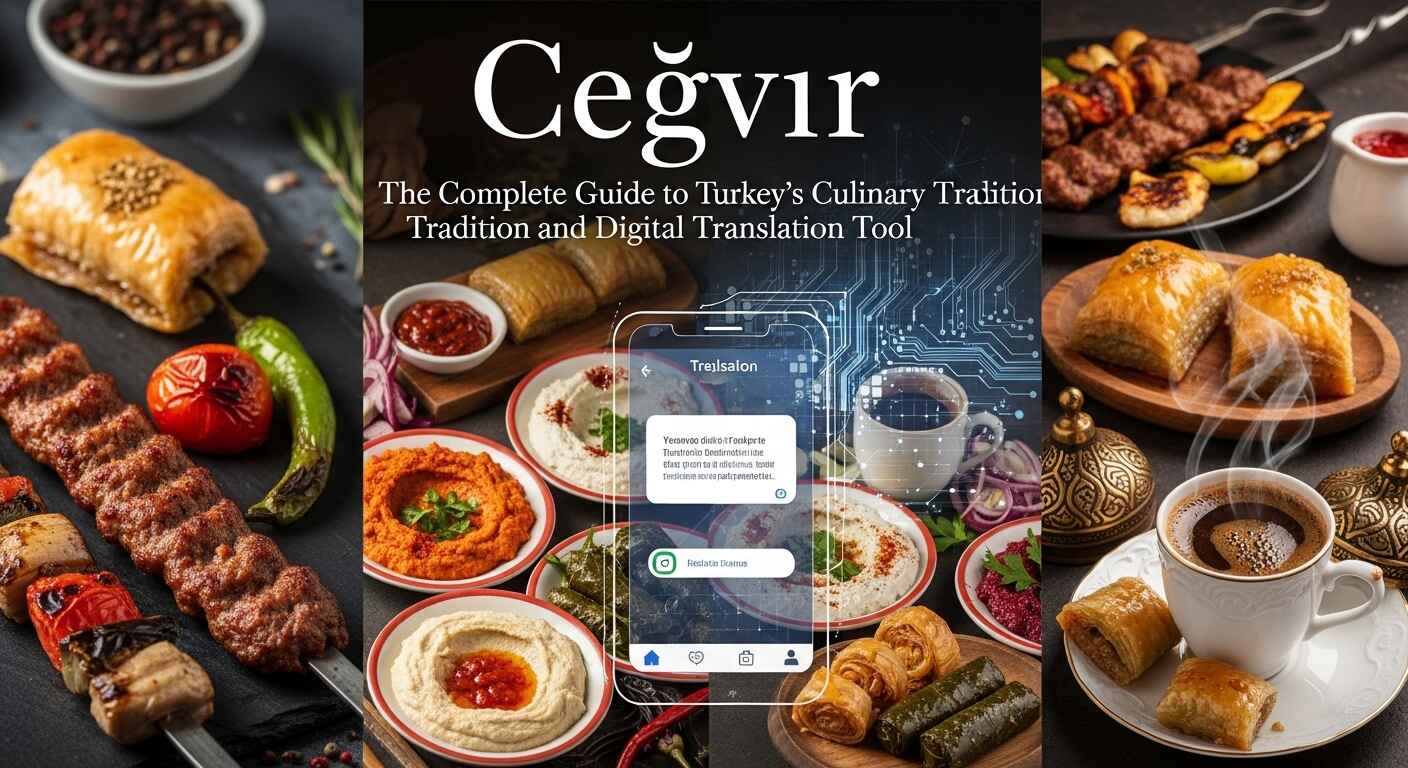
Ceıvır is a term with two distinct and equally important meanings. In Turkish culinary tradition, ceıvır refers to a slow-cooked, savory meat and vegetable dish with deep roots in Anatolian village cooking, celebrated for its rich flavors and communal spirit.
In the digital world, ceıvır is widely used as a phonetic reference to the Turkish word çevir, meaning “to translate,” and describes online translation tools and language apps used by millions globally. Understanding both dimensions of ceıvır gives you a complete picture of why this term has grown in popularity across food, travel, language, and technology searches.
Ceıvır at a Glance
| Dimension | Details |
|---|---|
| Culinary Meaning | Traditional Turkish slow-cooked meat and vegetable dish |
| Origin Region | Anatolia, Turkey |
| Core Ingredients | Lamb or beef, bulgur, tomatoes, peppers, herbs, spices |
| Cooking Method | Slow-cooked in clay pot or heavy pan |
| Digital Meaning | Term for online translation tools, derived from çevir (to translate) |
| Language of Origin | Turkish |
| Related Tools | Google Translate, DeepL, Microsoft Translator |
| Health Benefits | High protein, fiber-rich, antioxidant-packed |
| Served With | Flatbread, yogurt, pickled vegetables, ayran |
What Is Ceıvır the Turkish Dish?
Ceıvır is a traditional Turkish dish that has been prepared in Anatolian homes for centuries. It brings together tender meat, seasonal vegetables, aromatic herbs, and slow-cooking techniques that produce deeply layered flavors. The dish is rooted in the practical wisdom of rural kitchens, where cooks made the most of locally available produce, garden vegetables, and freshly raised livestock.
The name connects to the Turkish verb çevir, meaning “to turn” or “to transform,” which reflects the core idea behind the dish. Simple, everyday ingredients are turned into something rich, complex, and deeply satisfying through patience and careful preparation.
Ceıvır is not a restaurant showpiece. It is a household staple, a communal meal, and a celebration of what Turkish domestic cooking does best: convert wholesome raw materials into food that nourishes both body and spirit.
The History and Cultural Roots of Ceıvır
The origins of ceıvır stretch back into rural Anatolia, where households cooked seasonally and communally. Families prepared the dish during winter gatherings, festive occasions, and harvest celebrations. It was a way of feeding large groups generously using what was grown in the garden or raised on the land.
Unlike globally famous Turkish dishes such as kebab or baklava, ceıvır reflects the less visible but equally important side of Turkish food culture: the domestic, everyday cooking passed down through generations by mothers and grandmothers rather than celebrated chefs.
In many villages, preparing ceıvır was a collective activity. Neighbors gathered, tasks were shared, and the meal itself became an expression of community and hospitality. This tradition of communal cooking around a single large pot remains part of the cultural identity attached to ceıvır today.
Key Ingredients of Ceıvır and Their Significance
The beauty of ceıvır lies in its adaptability. No single universal recipe exists. What does exist is a shared foundation of ingredients that appears across regional variations with different emphasis and proportion.
Meat is the centerpiece. Lamb is the most traditional choice across Anatolia, reflecting centuries of pastoral culture. Beef is also widely used, particularly in southeastern regions. The meat is slow-cooked until it falls apart, absorbing all the surrounding flavors.
Vegetables provide moisture, sweetness, and color. Tomatoes, peppers, and onions form the base in most versions. They break down during cooking, creating a naturally rich sauce without the need for artificial thickeners.
Grains and legumes are included in many regional variations. Bulgur wheat is the most common, contributing texture and absorbing the cooking juices deeply. Chickpeas, lentils, and rice also appear depending on the region and season.
Herbs and spices define the Turkish character of the dish. Cumin, paprika, oregano, mint, and fresh parsley are typical. These ingredients create the warm, earthy, slightly floral flavoring that distinguishes ceıvır from other slow-cooked meat dishes.
Fat adds richness and mouthfeel. Olive oil is used in western and coastal regions while animal fat, particularly kuyruk yağı (tail fat from sheep), appears in eastern preparations.
How Ceıvır Is Prepared: The Traditional Method
Traditional ceıvır preparation is unhurried and deliberate. The process rewards patience with depth of flavor that cannot be achieved through quick cooking methods.
The preparation begins by sautéing aromatics. Onions, garlic, and peppers are softened gently in fat over medium heat until they release their natural sweetness. This foundation layer builds the base flavor of the entire dish.
The meat is added next and seared on all sides to develop color and seal in juices. Spices are added at this stage so they bloom in the hot fat and infuse the meat thoroughly.
Tomatoes and other vegetables join the pot along with a measured amount of water or broth. The mixture is brought to a simmer and then left to cook slowly over low heat, often for two to three hours. This extended cooking time allows every ingredient to soften, merge, and develop a layered complexity that defines authentic ceıvır.
If grains or legumes are included, they are added during the later stages of cooking so they absorb the seasoned juices without becoming overly soft.
Fresh herbs are added at the very end, just before serving, to preserve their brightness and fragrance against the richness of the slow-cooked base.
Regional Variations of Ceıvır Across Turkey
Turkey’s geographical and cultural diversity means ceıvır looks and tastes different depending on where you encounter it. Each region adds its own signature based on local produce, climate, and tradition.
Eastern Anatolia, including areas like Van and Bitlis, produces some of the most robust versions. Lamb and chickpeas are combined with smoky dried peppers that are unique to the region. The flavor profile here is deep, earthy, and warming.
Southeastern Anatolia often substitutes beef for lamb. Bulgur wheat is used prominently, creating a dish with a denser, more porridge-like texture. Tail fat is frequently used here, adding significant richness and a characteristic succulence.
Central Anatolia tends toward simpler spice blends. The cooking style is straightforward and allows the natural flavors of meat and grain to come forward without heavy seasoning.
The Aegean and coastal regions sometimes incorporate seafood into the ceıvır framework, particularly in fishing communities where fresh catches replace traditional meats. Olive oil dominates the fat component and lighter herbs are preferred.
Istanbul and urban centers have developed contemporary versions that respect the traditional structure while incorporating personal variations in spice use, vegetable selection, and plating style.
Nutritional and Health Benefits of Ceıvır
Ceıvır is a nutritionally complete dish when prepared in the traditional way. Its combination of protein, complex carbohydrates, fiber, and micronutrients makes it a well-rounded meal rather than a single-note comfort food.
The protein content from meat and legumes supports muscle maintenance, tissue repair, and immune function. This makes ceıvır a genuinely sustaining meal rather than simply a filling one.
The vegetable components, including tomatoes, peppers, and onions, deliver fiber for digestive health and antioxidants that counter cellular damage and inflammation. Fresh herbs like parsley and mint add vitamins and polyphenols alongside their flavor contribution.
When bulgur wheat is included, the dish gains complex carbohydrates that release energy steadily rather than causing rapid spikes and drops in blood sugar. Chickpeas and lentils increase the fiber content further while adding plant-based protein.
Slow cooking without excessive added fats means the dish preserves nutrients that would be lost through high-heat methods. It also avoids the caloric density of heavily fried preparations.
How to Serve and Enjoy Ceıvır
Ceıvır is traditionally served as a family-style meal placed at the center of the table for everyone to share. This communal presentation is as important as the food itself. It reflects the hospitality values central to Turkish culture.
Serving accompaniments that complement ceıvır include:
- Fresh flatbread for scooping and dipping into the cooking juices
- Plain yogurt or cacık, a yogurt and cucumber sauce, to balance the richness
- Pickled vegetables for sharp acidic contrast
- Ayran, a cold salted yogurt drink, as the traditional beverage pairing
- A simple bulgur or rice pilaf on the side
Sharing ceıvır is a gesture with social meaning in Turkish culture. Offering it to guests communicates welcome, generosity, and care. The meal is not rushed. It is meant to be eaten slowly, with conversation and gratitude for what the table provides.
What Is Ceıvır the Digital Translation Tool?
Beyond the kitchen, ceıvır has a separate and significant meaning in the digital world. The word is derived directly from çevir, the Turkish verb meaning “to translate” or “to convert.” In everyday Turkish internet use, people commonly type ceıvır or çeviri when searching for translation services, language apps, or text conversion tools.
Over time, ceıvır has become a generalized term in online searches used to describe any digital translation platform, website, or mobile application that converts text, speech, or documents from one language to another. It is not a specific brand or single product but rather a category label that has grown organically from Turkish language internet usage.
The term gained traction globally as Turkish internet users began sharing translation resources and as non-Turkish speakers encountered the word in search results and digital content.
Key Features of Ceıvır Translation Tools
Digital platforms referenced under the ceıvır category share a set of common features that define the translation tool experience.
Multi-language support is standard across all serious platforms. Most cover dozens of languages at minimum, with leading services supporting over 100. This range makes them useful for communication across almost any language pairing.
Instant text translation is the core function. Users input a word, sentence, or paragraph and receive a translation within seconds. Speed is a defining feature that separates digital ceıvır tools from human translation services.
Voice and speech recognition capabilities allow spoken input to be translated directly. This is particularly valuable for travel situations where typing is impractical and real-time conversation translation is needed.
Image and document translation extends the usefulness of ceıvır tools beyond text boxes. Photographs of menus, signs, contracts, or handwritten notes can be processed and translated by advanced platforms.
Cross-platform availability ensures that ceıvır tools are accessible via web browsers, mobile apps, and browser extensions, fitting into different workflow preferences.
Popular Platforms That Function as Ceıvır Tools
Several well-known services operate within what Turkish users call the ceıvır category.
| Tool | Best Known For | Languages Supported |
|---|---|---|
| Google Translate | General everyday translation | 100 plus |
| DeepL Translator | High accuracy and natural phrasing | 30 plus |
| Microsoft Translator | Office integration and speech translation | 70 plus |
| Yandex Translate | Eastern European and Asian language strength | 100 plus |
| iTranslate | Voice-to-voice mobile translation | 100 plus |
Each platform has strengths suited to different use cases. Google Translate offers the broadest language coverage. DeepL is preferred for professional documents requiring natural-sounding output. Microsoft Translator integrates well with business software environments.
Limitations of Digital Ceıvır Tools
Despite their widespread usefulness, ceıvır translation tools have documented limitations that users should understand before depending on them entirely.
Accuracy is the most significant concern. Automated translation performs well for straightforward sentences but struggles with idiomatic expressions, cultural nuance, and complex sentence structures. A direct word-for-word translation of an idiom frequently produces a confusing or incorrect result.
Grammar in translated output varies by language pair. Some languages present structural challenges that current AI cannot fully resolve, producing outputs that are technically comprehensible but read awkwardly.
Privacy is a concern when sensitive content is entered into free public translation platforms. Confidential business information, legal documents, or personal correspondence may not be secure when processed through third-party translation servers.
Internet dependency remains a practical limitation for most ceıvır tools. Offline functionality is improving but not yet universal across platforms.
The Future of Ceıvır Translation Technology
Artificial intelligence and machine learning are rapidly improving the quality and capability of ceıvır translation tools. Current development trajectories suggest several significant advances in the near future.
Context-aware translation is becoming more sophisticated, allowing platforms to recognize the surrounding meaning of a word rather than translating it in isolation. This addresses one of the most persistent weaknesses in automated translation.
Emotion recognition in speech translation is an emerging area that aims to capture tone and register alongside literal meaning, making spoken translations feel more natural and appropriate.
Offline AI translation is advancing rapidly, making it possible to use ceıvır tools in locations without reliable internet access.
Integration with augmented reality interfaces may eventually allow real-time translation overlaid onto physical environments through smart glasses or phone cameras, eliminating the step of manually inputting text entirely.
Frequently Asked Questions
What is ceıvır?
Ceıvır has two meanings. It refers to a traditional Turkish slow-cooked dish made with meat, vegetables, herbs, and grains. It also describes digital translation tools, derived from the Turkish word çevir meaning to translate.
What does ceıvır mean in Turkish cooking?
In Turkish cuisine, ceıvır is a hearty slow-cooked dish typically prepared with lamb or beef alongside vegetables and bulgur wheat. It is a communal meal with deep roots in Anatolian village tradition.
What does the word ceıvır mean in digital use?
In digital and online contexts, ceıvır is a phonetic rendering of the Turkish word çevir, meaning to translate. It is used as a general term for online translation platforms and language apps.
What are the main ingredients in ceıvır the dish?
The core ingredients are meat (usually lamb or beef), tomatoes, peppers, onions, bulgur wheat or legumes, and spices including cumin, paprika, and fresh herbs like parsley and mint.
How is ceıvır the dish cooked?
It is slow-cooked in a heavy pot or clay pan over low heat for two to three hours. Aromatics are sautéed first, followed by the meat, then vegetables and grains are added and simmered until the flavors fully merge.
Is ceıvır a healthy dish?
Yes. It is high in protein from meat and legumes, rich in fiber from vegetables and grains, and contains antioxidants from herbs and spices. Slow cooking without heavy added fats preserves nutritional quality.
Can ceıvır the dish be made vegetarian?
Yes. Many cooks substitute the meat with legumes such as chickpeas or lentils while keeping the spice base and vegetable components intact, producing a nutritious plant-based version.
What is the most accurate ceıvır translation tool?
DeepL is widely regarded as producing the most accurate and natural-sounding translations, particularly for European languages and professional documents. Google Translate offers the broadest language coverage.
Are ceıvır translation tools free?
Most major ceıvır translation platforms offer free basic services. Premium tiers with higher word limits, document translation, and API access are available through paid subscriptions.
How should ceıvır the dish be served?
It is served family-style in the center of the table, accompanied by flatbread, yogurt, pickled vegetables, and ayran. Sharing it communally is central to the social tradition surrounding the meal.
Read Also: Toastul: The Viral Toast Trend Taking Over Breakfast in 2026