
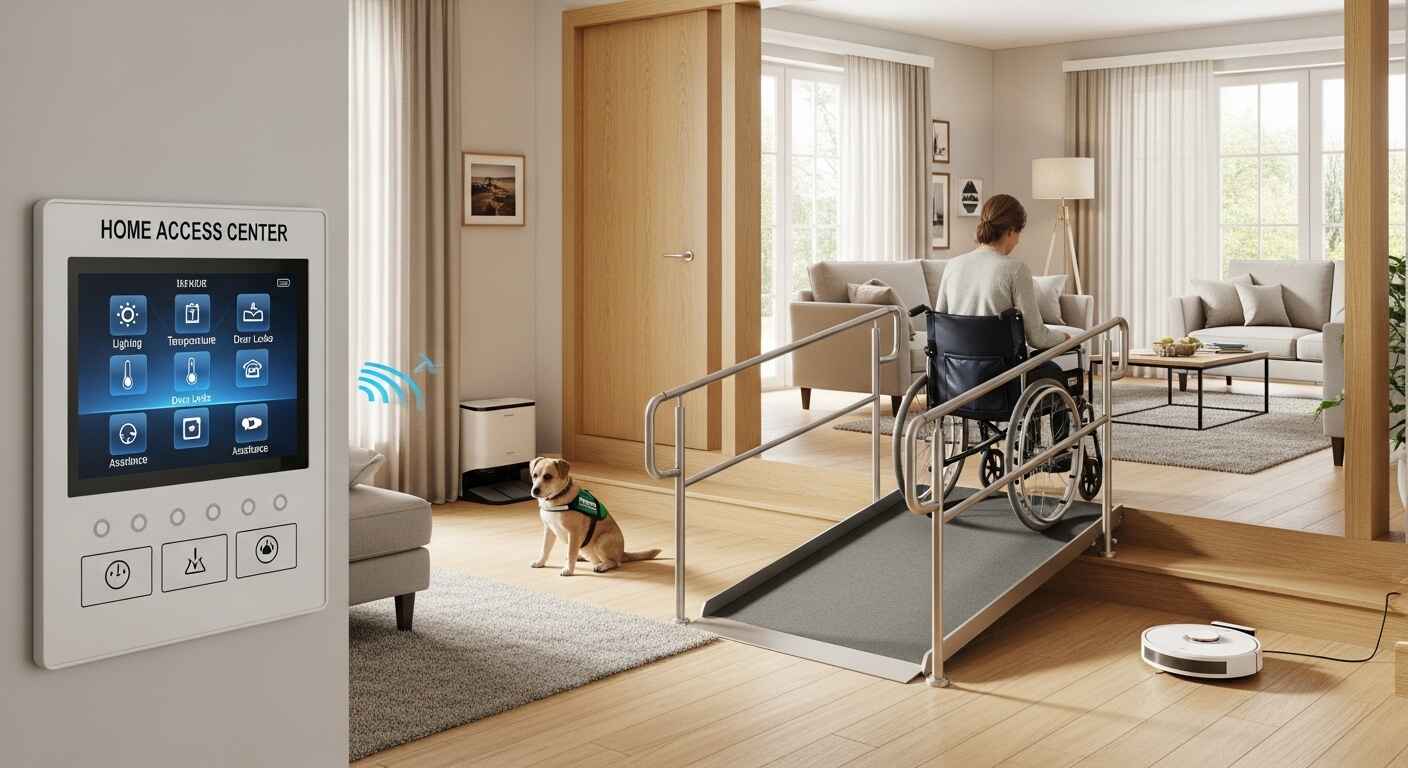
Creating a home access center isn’t about installing a digital portal—it’s about transforming your living space into an accessible, safe environment that serves as the central hub for comfortable aging in place. As the population ages and more individuals choose to remain in their homes rather than transition to assisted living facilities, the concept of a well-designed home access center has become increasingly important for homeowners, their families, and caregivers alike.
Understanding the Home Access Center Concept
A home access center is a comprehensive approach to modifying your home to ensure safe, independent living, regardless of age or mobility challenges. This involves strategic renovations and modifications to create barrier-free pathways, install safety features, and incorporate technology to support daily living activities. According to recent studies, approximately 77% of Americans over 50 prefer to age in place, making home accessibility modifications more relevant than ever.
The foundation of an effective home access center is recognizing that accessibility isn’t just about accommodating wheelchairs or walkers. It provides a holistic view of how individuals interact with their living spaces, from the moment they enter their homes to performing everyday tasks such as cooking, bathing, and moving between rooms. By creating an accessible environment early—before mobility challenges become severe—homeowners can prevent falls, reduce injury risk, and maintain their independence for longer.
Essential Components of Your Home Access Center
Entryways and Doorways
The journey to creating an accessible home begins at the front door. Traditional stoops and stairs present significant barriers for individuals with limited mobility. Installing ramps with proper gradients provides wheelchair access while also making entry easier for those using walkers or canes. The recommended slope for residential ramps is 1:12, meaning one inch of rise for every twelve inches of length.
Doorway modifications are equally critical. Standard 32-inch doorways may not accommodate mobility devices comfortably. Widening doorways to at least 36 inches creates sufficient clearance for wheelchairs, walkers, and other assistive equipment. Additionally, replacing traditional doorknobs with lever-style handles eliminates the need for twisting motions that can be painful for individuals with arthritis.
Bathroom Safety Modifications
Bathrooms are among the highest-risk areas in any home. The combination of hard surfaces, water, and confined spaces makes them particularly dangerous for falls. A comprehensive home access center prioritizes bathroom modifications including walk-in showers or tubs, which eliminate the need to step over high thresholds.
Strategically placed grab bars near toilets, showers, and bathtubs provide essential support during transfers and movement. Modern grab bars come in various styles and finishes, allowing them to blend seamlessly with bathroom décor while serving their critical safety function. Installation costs typically range from $100 to $300, making them among the most cost-effective safety investments.
Raised toilet seats reduce strain on the knees and back, while non-slip mats prevent slips and falls on wet surfaces. These simple modifications can be implemented quickly and affordably, often within a single day, yet they provide immediate safety benefits that can prevent life-altering injuries.
Kitchen Accessibility Solutions
The kitchen is the heart of most homes, but traditional kitchen designs often pose challenges for individuals with mobility limitations. Lowering countertops to wheelchair-accessible heights (typically 28-34 inches) ensures that food preparation remains possible for all residents. Installing pull-out shelves in lower cabinets eliminates the need to bend or reach into deep spaces.
Lever-style faucets with single-handle controls make adjusting water temperature and flow easier for those with limited hand strength or dexterity. Side-opening ovens and front-control ranges reduce the risk of burns and make cooking safer for individuals who use wheelchairs or have balance issues.
Lighting and Visual Accessibility
Proper lighting forms a cornerstone of home accessibility that many homeowners overlook. Research indicates that approximately one-third of seniors over 65 experience reduced vision, making adequate lighting essential for safety and comfort. A well-lit home access center incorporates multiple layers of illumination, including ambient lighting for overall room brightness, task lighting for specific activities, and accent lighting to highlight potential obstacles or changes in floor level.
Natural light provides significant emotional and mental health benefits. Installing skylights or enlarging windows brings daylight deeper into living spaces. Motion-activated lights in hallways, bathrooms, and staircases ensure illumination is available exactly when needed, reducing the risk of stumbling inthe darkness.
Smart lighting systems offer additional benefits, allowing residents to control brightness and color temperature from wall switches, remote controls, or voice commands. Dimmable bulbs provide flexibility throughout the day, supporting natural circadian rhythms while accommodating varying vision needs.
Technology Integration
Modern home access centers increasingly incorporate smart home technology that enhances safety and convenience. Voice-activated systems allow residents to control lights, locks, thermostats, and entertainment systems without physical interaction. This technology proves particularly valuable for individuals with limited mobility who might otherwise need to move repeatedly throughout the day to adjust their environment.
Medical alert systems provide peace of mind for both residents and their families. These devices connect users with emergency services at the push of a button, ensuring help arrives quickly in case of falls or medical emergencies. Contemporary systems include fall detection technology that automatically alerts emergency contacts when unusual movement patterns are detected.
Video doorbells and security cameras allow residents to see and communicate with visitors without approaching the door, adding both security and convenience to daily life.
Flooring and Surface Considerations
Flooring choices significantly impact accessibility and safety. High-pile carpeting can impede wheelchair and walker passage and create tripping hazards. Low-pile carpeting, luxury vinyl plank, or other smooth surfaces provide easier navigation while maintaining comfort and aesthetic appeal.
Eliminating thresholds between rooms creates seamless transitions that prevent tripping. Where level changes are unavoidable, installing small ramps smooths the transition and maintains accessibility for all mobility devices.
Financial Assistance and Planning
The cost of creating a comprehensive home access center varies widely based on the scope of required modifications. Simple changes like installing grab bars, improving lighting, and adding lever handles can cost a few hundred dollars. More extensive renovations, including bathroom remodels with walk-in showers or kitchen accessibility upgrades, may range from $10,000 to $30,000 or more.
Various funding sources exist to help offset these costs. Some Medicare Advantage plans include coverage for certain home modifications. The U.S. Department of Agriculture offers grants of up to $10,000 and loans of up to $40,000 to eligible rural homeowners through the Section 504 Home Repair Program. Local Area Agencies on Aging can connect homeowners with community resources, contractors, and region-specific funding opportunities.
Nonprofit organizations, including Rebuilding Together and Habitat for Humanity’s Aging in Place Program, provide free or low-cost repairs and accessibility modifications to qualifying low-income seniors. Additionally, certain home modification expenses may be tax-deductible, potentially reducing the overall financial burden.
Conclusion
Creating an effective home access center represents an investment in long-term independence, safety, and quality of life. By thoughtfully modifying living spaces to accommodate evolving mobility needs, homeowners can remain in the homes they love for years or even decades longer than they otherwise would. The key lies in proactive planning, prioritizing high-impact modifications, and leveraging available resources and funding programs. Whether starting with simple adaptive equipment or undertaking comprehensive renovations, every step toward improved accessibility moves homeowners closer to achieving their goal of aging in place with dignity, comfort, and independence.
 admin
admin